Seattle Streets Alliance
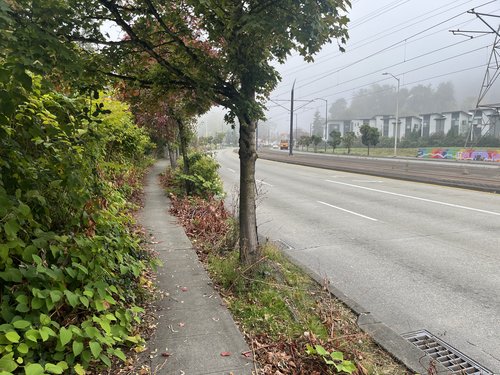
Martin Luther King Jr Way S is one of the deadliest roads in Seattle. Over the road’s 5 mile stretch in the Rainier Valley, nearly 3,000 crashes have injured over 1,000 people and killed 20 people since 2009. Despite the frequent crashes and injuries, the road design has not changed. It is time to redesign MLK Way to prioritize safety for everyone.
Local Hazard
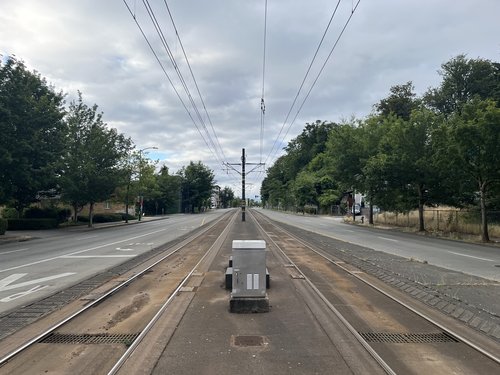
While MLK Way provides immense utility for the tens of thousands of people who drive, bike, walk, or ride transit on it every day, the current design puts everyone at risk. In 2020, the speed limit on MLK Way was lowered from 35mph to 25mph. This change was part of a broader Vision Zero effort to reduce dangerous collisions on Seattle’s streets. Despite the new signs, the wide lanes and road design still encourage faster speeds. As a result, about 25% of vehicles travel above 35 mph. SDOT has measured vehicles traveling as fast as 88mph on MLK Way.
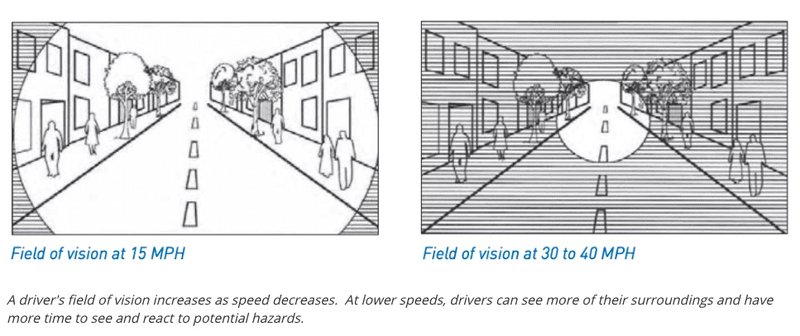
Speeding is dangerous for everyone involved. Drivers traveling at higher speeds have a narrower field of view, making it harder for them to see and react to other cars, people, and trains on MLK Way. Further, a 2011 study found that someone has a 70% higher chance of being killed by a vehicle traveling at 30mph versus at 25mph.
Since 2009, over 150 drivers have lost control and driven their car off of MLK Way into trees, homes, and local businesses. This is only possible while speeding and endangers everyone who lives, works, or travels on MLK Way.
Regional Impact
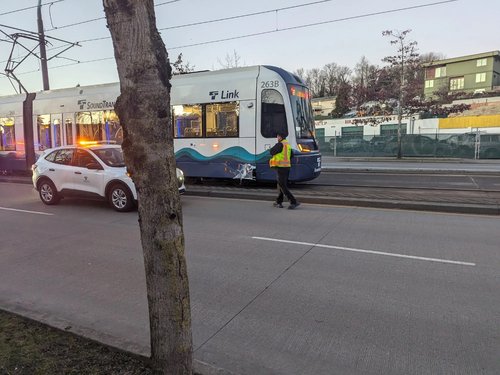
Every crash on MLK Way is felt in the Rainier Valley. Some crashes, however, disrupt the journey for hundreds of thousands of people across the region. In a situation unique within Seattle, Link trains travel at-grade in the median of MLK Way. This at-grade section has eighteen intersections that allow vehicles and pedestrians to cross the Link tracks and an additional ten intersections that only allow pedestrian crossing. Since 2009, trains and vehicles have collided over 117 times. A train has hit a pedestrian at least 6 times. More commonly, a crash involving two cars can block trains on MLK Way. This can lead to significant delays for passengers as far away as Lynnwood, Federal Way, and Redmond. Reducing the frequency and severity of collisions on MLK Way will help ensure Link reliability.
The current design of MLK Way as a multi-lane arterial has resulted in thousands of crashes and injuries, and the loss of 20 neighbors in the Rainier Valley. SDOT’s 2023 Vizion Zero Top-to-Bottom Review found that 80% of pedestrian deaths occur on arterial roads with more than one lane in each direction. To achieve Seattle’s Vision Zero goal, MLK Way must be redesigned with one travel lane in each direction.
What can you do?
Help us make MLK Way a safer street for everyone! Over the next few months, we will meet with our neighbors throughout the Rainier Valley to hear what they want to see changed on MLK Way. Tell us what you would like to see improved, or sign up here to receive updates about the effort to make a safer MLK Way.
The best way to learn how a street works (or doesn’t work) is to experience it first hand. Join us every 1st and 3rd Saturday of the month to improve a section of MLK Way. Between 9am-11am, we will trim bushes, pick up trash, and rake leaves on MLK Way. The next upcoming meet ups are:
- November 7, 2026: MLK Way between Merton Way S and S Henderson St
- November 21, 2026: MLK Way between S Henderson St and S Cloverdale St
- December 5, 2026: MLK Way between S Cloverdale St and S Rose St
- January 2, 2027: MLK Way between S Rose St and S Kenyon St
- January 16, 2027: MLK Way between S Kenyon St and S Holden St